
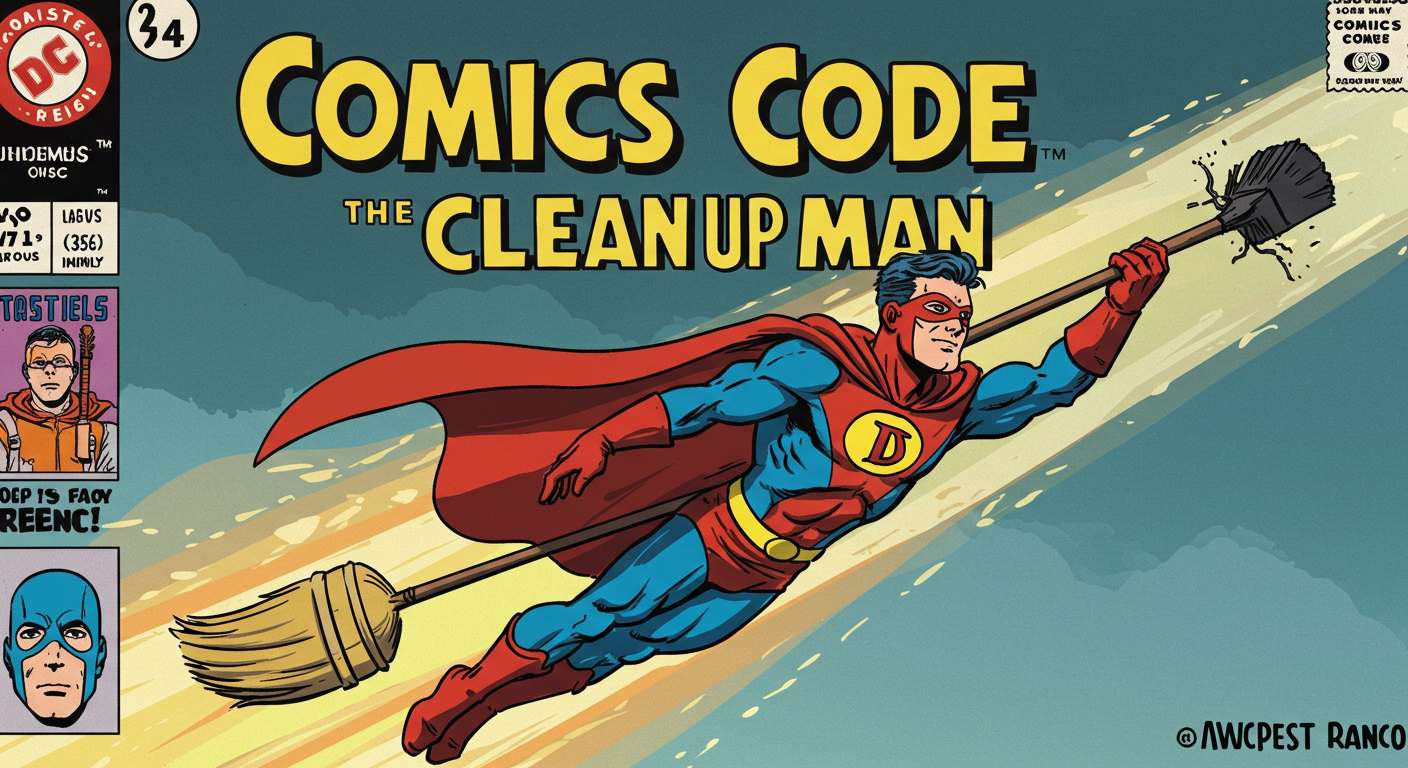
Approved by the Comics Code Authority
In 1954, US comics went “clean” in response to moral panic over their alleged harm to children and teens. The Comics Code, though voluntary, was an enormously powerful force that shaped the creative landscape for decades. We are going to study how the comics code altered the history of the medium in the United States.
Introduction
In 1954, US comics went “clean” in response to moral panic over their alleged harm to children and teens. The Comics Code, though voluntary, was an enormously powerful force that shaped the creative landscape for decades. We are going to study how the comics code altered the history of the medium in the United States.
Comics frequently show us the zeitgeist of a society in miniature, even as they push the boundaries of acceptable writing and art. Famously, in 1954, the US comics industry grafted onto itself a restrictive, moralistic “code” of acceptable practices in order to placate a morally panicked public. Publishers reasoned that if they “cleaned up” comics themselves, then they could avoid congressional regulation of their medium. In fact, they were so successful that the last major US comic publishers only abandoned the code in 2011.
This expedition is about the Comics Code and how it changed the art form. We will learn about the history of the US comics industry, the moral panic that birthed the code, and the various ways that comic writers and artists adapted to its demands. We will analyze various comics for code compliance, and reflect on how these and other standards affect the creative process.