
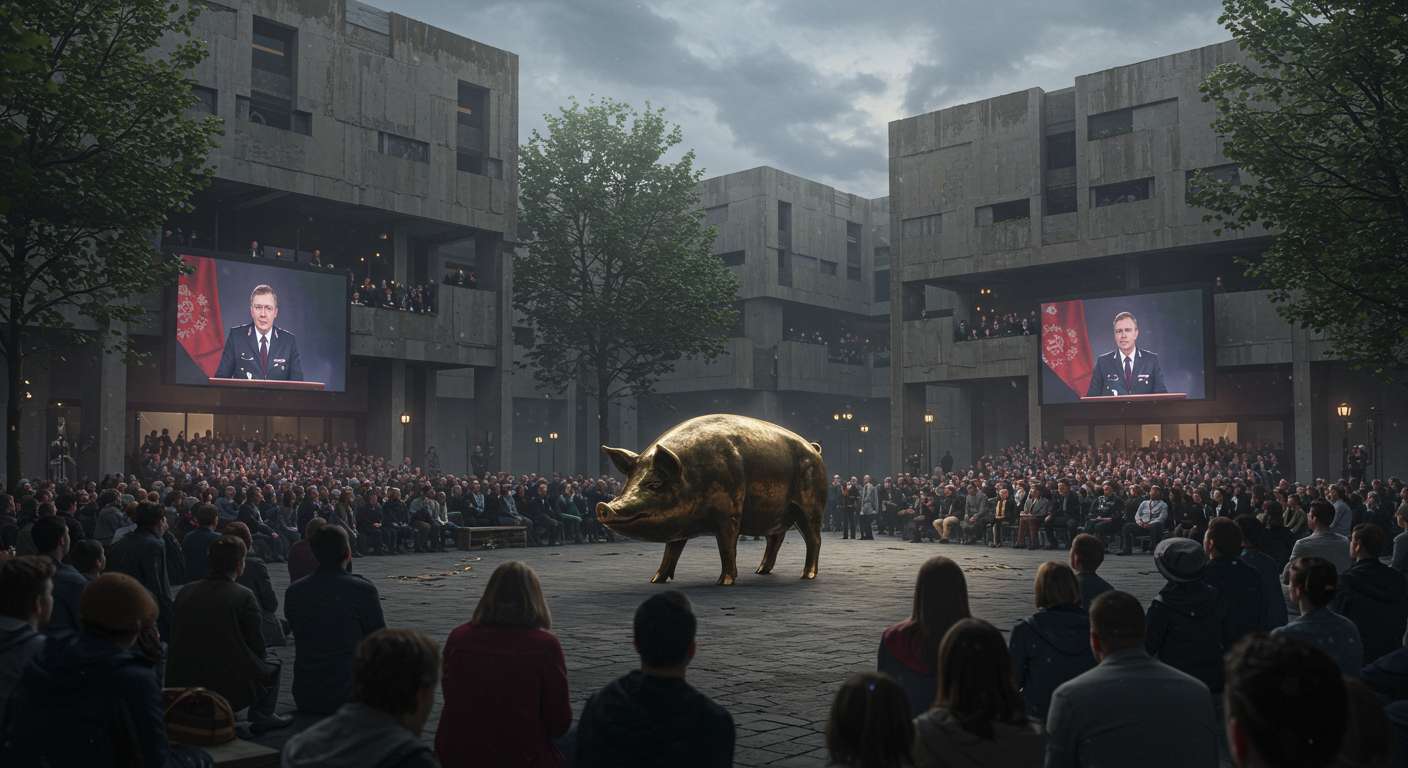
Obey and Believe
This reading-based expedition will have students analyze Animal Farm and 1984 by George Orwell, as well as Brave New World by Aldous Huxley, to examine how the pursuit of a utopian society can lead to authoritarian or controlling regimes.
Introduction
This reading-based expedition will have students analyze Animal Farm and 1984 by George Orwell, as well as Brave New World by Aldous Huxley, to examine how the pursuit of a utopian society can lead to authoritarian or controlling regimes. By dissecting Orwell’s and Huxley’s allegories, students will explore how dystopias take various forms and how war narratives can be shaped through visual propaganda and political rhetoric.
Students will also study the influence of the printing press and the rhetorical triangle to understand the power of persuasion in a national scope. The historical context will include an overview of the Russian Revolution, the rise of the Communist Party, and its role in the Cold War.
Through the expedition students will have the opportunity to create their own propaganda poster of one of the three novels reviewed.
Essential Questions
What caused imperialism?
How did people’s lives change after imperialism?
How does technological change affect people, places, and regions?
What assumptions do different groups hold about power, authority, governance and law?
What are the origins of the dystopian and utopian concepts in literature?
How did the social and political landscape of the XXth century inspire the dystopian genre?
How can the expedition's texts be interpreted as a warning of where the world can be headed to.
Learning Objectives
Animal Farm
-
Compare the impacts of socialism, capitalism, and anarchism as responses to the collapse of imperial rule.
-
Identify the philosophical and historical roots of utopian and dystopian literature.
Brave New World
-
Critically examine how dominant powers use ideology—such as nationalism or modernization—to justify control over others.
-
Explain the economic, political, and ideological causes of imperialism in the 19th and 20th centuries.
1984
-
Recognize recurring themes of manipulation, surveillance, and loss of autonomy in dystopian fiction.
-
Analyze how texts like Animal Farm, 1984, and Brave New World critique systems of control and predict oppressive futures.
-
Interpret dystopian literature as a reflection of real-world fears about political and technological power.